SW ADHESIVE
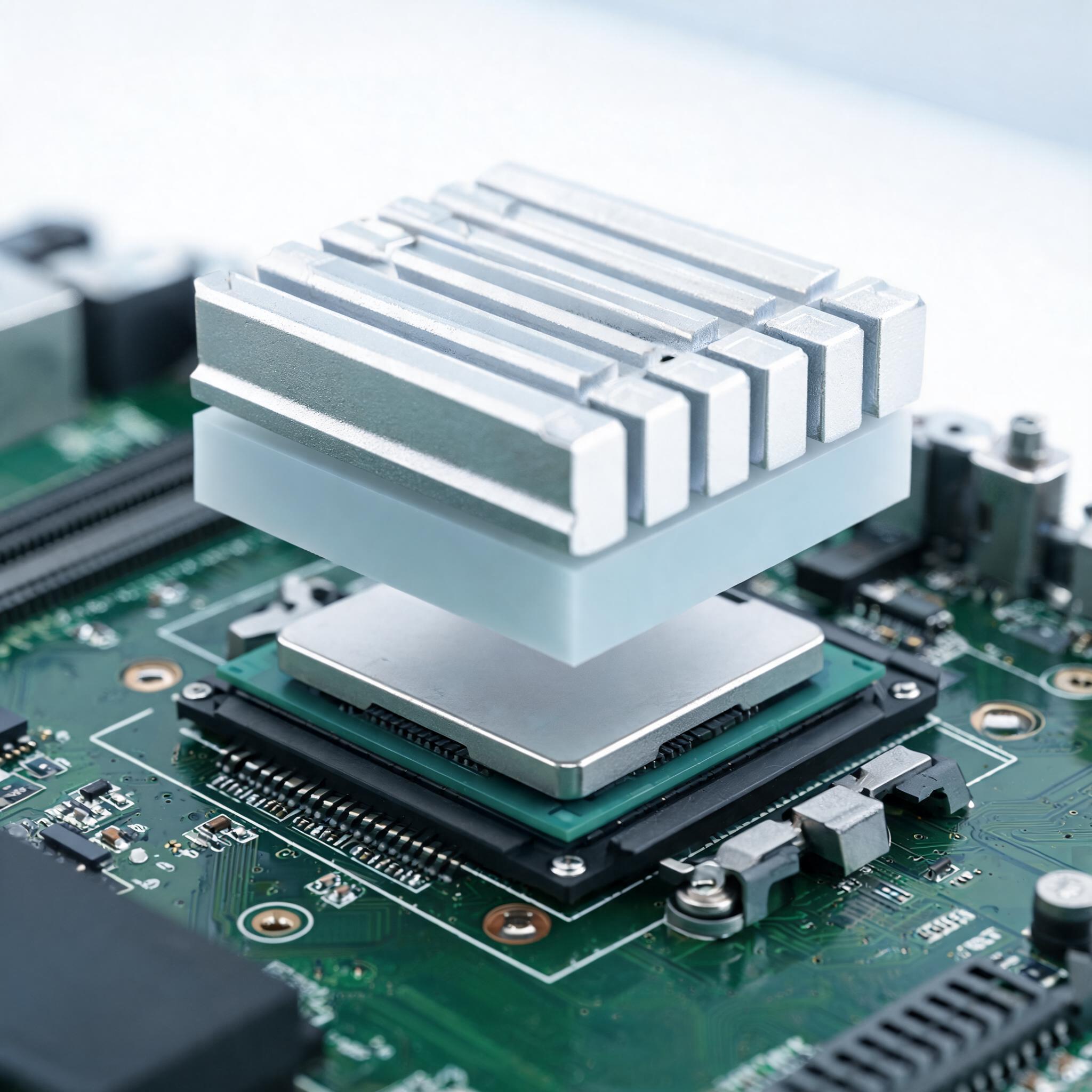
Thermal Interface Silicone Pad 5 W/mK
Compressible silicone thermal pad for CPU, GPU, and component heat dissipation.
Highlights
- Thermal conductivity 5 W/mK
- Dielectric strength 3000 V/mm
- Compression stable 10-50 psi range
- Reusable 100+ thermal cycles
- Thickness options 0.5, 1.0, 2.0 mm
- Operating range -40°C to +130°C
- RoHS 2008/58/EC compliant
- UL 94 V-0 flammability rated
Specifications
| Thermal Conductivity | 5 W/mK |
|---|---|
| Dielectric Strength | 3000 V/mm |
| Compression Stability | 10-50 psi |
| Operating Temperature | -40°C to +130°C |
| Certifications | RoHS 2008/58/EC, UL 94 V-0 |
Product Detail
Thermal Interface Silicone Pad — 5 W/mK
A pre-cured, solid silicone thermal pad designed for CPU cooling and electronics assembly applications where reliable heat transfer and electrical isolation are both required. With a thermal conductivity of 5 W/mK and a dielectric strength of 3000 V/mm, this pad bridges heat-generating components and heat sinks without introducing conductive paths — a combination that makes it suitable for CPU-to-heatsink interfaces, power module mounting, and general PCB thermal management.
At a Glance
What These Specifications Mean for Your Assembly
Thermal Conductivity at 5 W/mK
A 5 W/mK rating positions this pad in the mid-range of silicone thermal interface materials — sufficient for standard CPU cooling, power semiconductor packages, and LED modules where heat flux is moderate and consistent. For ultra-high-density power devices pushing 100+ W/cm², a higher-conductivity TIM may be worth comparing; for most electronics assembly applications, 5 W/mK provides a practical balance between cost and thermal performance.
Dielectric Strength: 3,000 V/mm
This is a dielectric material — it electrically isolates the heat source from the heat sink. At 3,000 V/mm, the pad prevents current leakage between components at different potentials, which matters in power electronics assembly and anywhere the heatsink is grounded separately from the device. The pad's thickness directly determines the total isolation voltage: a 1.0 mm pad provides approximately 3,000 V of insulation, while a 0.5 mm pad provides approximately 1,500 V. Confirm your required creepage and clearance margins against these values during selection.
Compression Stability: 10–50 psi
The pad maintains stable thermal performance across a 10–50 psi compression range. Below 10 psi, contact gaps may remain and thermal resistance increases; above 50 psi, the pad may deform beyond its designed recovery range. For production assembly, verify that your mounting clamp or screw torque produces pressure within this window across the entire pad area — uneven pressure distribution is a common cause of hot spots even when the TIM itself is correctly specified.
Operating Temperature: −40 °C to +130 °C
This range covers typical indoor and industrial electronics environments, including cold-start conditions and sustained operating temperatures. The pad remains dimensionally stable and retains its dielectric properties across the full range. If your application involves sustained temperatures near the +130 °C upper limit, confirm that the surrounding components and mounting hardware are also rated for continuous operation at that level.
No Cure Required — Solid Pad Form
Unlike thermal greases or cure-in-place compounds, this is a pre-formed solid silicone pad. It requires no mixing, no cure time, and no dispensing equipment. This simplifies assembly line processes, reduces application variability between operators, and allows repositioning during installation. The trade-off is that pads conform less to surface irregularities than grease — ensure mating surfaces have reasonable flatness (typically within 0.05 mm) for optimal contact.
Thickness Selection Guide
- 0.5 mm — Tightest gap-filling; lowest thermal resistance; best for components with minimal height variance and direct-mount heatsinks.
- 1.0 mm — General-purpose choice; accommodates moderate surface unevenness while keeping thermal path short.
- 2.0 mm — Fills larger gaps between component and heatsink; higher thermal resistance but necessary when height variance or mechanical design requires it.
Custom thickness requirements beyond these three standard options can be discussed — please include your target thickness and tolerance in your inquiry.
Reusability: 100+ Thermal Cycles
The pad survives 100+ thermal cycles without significant degradation of thermal or dielectric properties. Thermal cycling refers to repeated heating and cooling within the operating temperature range, which causes differential expansion and contraction between the pad and mating surfaces. This reusability is relevant for prototyping, rework, and field service — the pad can be removed and reapplied during troubleshooting without immediate replacement. For high-volume production, we still recommend fresh pads for each final assembly to ensure consistent interface quality.
Certifications
- RoHS compliant per Directive 2008/58/EC — confirms restriction of hazardous substances for electronics assembly compliance.
- UL 94 V-0 flammability rated — the pad self-extinguishes within 10 seconds after flame removal with no flaming drips, meeting the stringent vertical burn test standard for electronic components.
Buyer FAQ
No. It is classified as a dielectric material with a dielectric strength of 3,000 V/mm. It provides electrical isolation between the heat source and the heat sink while conducting heat.
Standard thickness options are 0.5 mm, 1.0 mm, and 2.0 mm. For custom die-cut dimensions or non-standard thickness, please provide your required dimensions, tolerance, and annual volume in your inquiry so we can confirm feasibility and tooling.
No. This is a solid, pre-cured silicone pad. It is applied directly between mating surfaces — no mixing, curing, or waiting period is needed before operation.
Thermal grease typically offers lower thermal resistance due to thinner bond lines, but requires careful dispensing, has no dielectric isolation, and can pump out or dry out over time. This pad provides electrical isolation, consistent application without mess, and dimensional stability — at the cost of slightly higher thermal resistance due to greater thickness.
MOQ and lead time depend on the thickness, dimensions, and total quantity required. Please submit your specification and target volume through the inquiry form below for a detailed quotation.
The pad is rated for 100+ thermal cycles and can be removed and reapplied during rework or prototyping. For final production assemblies, we recommend using a fresh pad to ensure optimal surface contact.
Product-specific documentation is available upon request. Please indicate your requirements in the inquiry, including any testing or compliance documents needed for your qualification process.
Request a Quotation
To receive an accurate quote and lead time, include your required thickness (0.5 / 1.0 / 2.0 mm or custom), die-cut dimensions and tolerances, estimated annual quantity, and destination country. If you need a specific dielectric voltage margin or compliance document, mention it so we can confirm compatibility before quoting.
Submit Your Inquiry